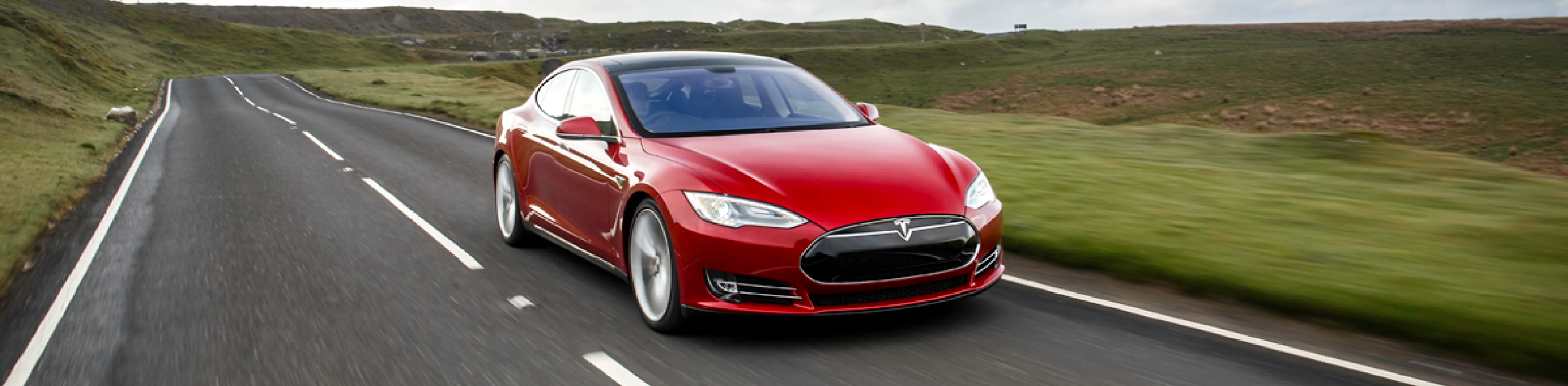
Tesla promised that every car had the hardware needed for full self-driving. That was not true. On 22 April 2026, Elon Musk admitted that Hardware 3, installed in approximately 4 million Tesla vehicles worldwide, simply does not have the capability to deliver unsupervised self-driving. What he promised when you bought the car cannot be fulfilled with the hardware that's in it.
You paid up to €7,500 for a feature you will never receive.
Register now, it's free.
Anyone who owns or has owned a Tesla with Hardware 3 (FSD Computer 3.0). This covers most Tesla Model 3, Model S, Model X and Model Y vehicles delivered between 2019 and late 2023.
Do you own an older Tesla from 2016–2019 that was upgraded from HW2.5 to HW3? You are also affected. You have been through this twice: first you were told HW2.5 was sufficient for self-driving, then you were upgraded to HW3 and told that was enough. It was not.
It does not matter whether you purchased the FSD package or not. Tesla promised that the hardware was sufficient for full self-driving, that promise applied to all buyers.
It does not matter whether you still own the car or have sold it. If you have owned an affected Tesla, you may be entitled to compensation.
When Tesla sold these cars, the message was crystal clear. On Tesla's website:
Every Tesla is equipped with the hardware needed in the future to make the vehicle fully self-driving in almost all circumstances.
The FSD package was sold as a one-time purchase. The configurator listed specific features with a delivery timeline of "later this year." The only disclaimer mentioned regulation and reliability, not hardware limitations or future replacement.
Seven years later, no Tesla with Hardware 3 can drive unsupervised. And Tesla now admits they never will.
29 January 2025: Elon Musk admitted on Tesla's earnings call that "we will need to replace all HW3 computers in vehicles where FSD was purchased." He called it "painful and difficult."
October 2025: Tesla partially retracted the upgrade commitment and instead announced a stripped-down "v14 Lite" for HW3 vehicles, a fundamentally different product from what was sold.
10 April 2026: The Dutch vehicle authority (RDW) approved FSD for public roads, exclusively for vehicles with the newer AI4 hardware. HW3 vehicles were excluded.
22 April 2026: Musk publicly admitted on Tesla's earnings call that "Hardware 3 simply does not have the capability" for unsupervised FSD.
15 months after Musk's initial admission, Tesla still has no upgrade plan, no refund policy and no concrete timeline for HW3 owners.
Independent testing from March 2026 documents a measurable performance difference between HW3 and AI4: HW3 averages 120 miles between driver disengagements, versus 450 miles for AI4. That is nearly four times worse, for the same product name and the same price.
Tesla's own patent application (US20260017503A1) describes the mathematical workaround required to run FSD on HW3, and acknowledges that the method can render the system "inoperable" for perception units.
Nothing. It is completely free to register and participate. You pay nothing unless the case is won.
If the case succeeds, you receive 65% of the compensation. The remainder pays for the lawyers, litigation funding, and platform operating costs.
| Share | |
|---|---|
| You (participant) | 65% |
| Lawyers and funding | 30% |
| Platform fee | 5% |
The claim is based on what you paid for the FSD package, plus potential compensation for loss of vehicle value.
| You paid for FSD | Potential compensation |
|---|---|
| €5,300 – €7,500 | Full refund for FSD purchase |
| + loss of value | Compensation for reduced vehicle value |
In the US, a judge has already certified a class action on a full refund basis. In Australia, plaintiffs are seeking similar relief. In the Netherlands, 4,000 owners are claiming approximately €6,800 each, what they paid for FSD.
Compensation levels will depend on jurisdiction and outcome, but Tesla's own admissions make the case unusually strong.
| What Tesla said | What happened |
|---|---|
| "Every Tesla has the hardware needed for full self-driving" (2016–2019) | Musk admitted in January 2025 that HW3 must be physically replaced |
| "All training is for Hardware 3" (Musk, March 2024) | FSD was approved in the Netherlands April 2026, for AI4 only |
| "Coming later this year" (configurator 2019) | Seven years later, none of the listed features work fully on HW3 |
| "We will need to replace all HW3 computers" (Musk, January 2025) | 15 months later: no plan, no refund, no timeline |
| Tesla deleted the blog post documenting the hardware promise (August 2024) | A pattern of deliberate evidence removal |
| "Hardware 3 simply does not have the capability" (Musk, 22 April 2026) | The final admission |
A federal judge in California certified a class action (LoSavio v. Tesla) in August 2025 on behalf of owners who purchased FSD based on misleading marketing. Tesla appealed in December 2025. In a separate case (Benavides v. Tesla), a Miami jury awarded $243 million in damages, including $200 million in punitive damages. The California DMV (Department of Motor Vehicles) ruled in December 2025 that Tesla's use of the term "Full Self-Driving" is "actually, unambiguously false."
A Dutch Tesla owner has launched a collective claim (hw3claim.nl) that gathered 4,000 owners from 29 countries in one week. The initiative is in the sign-up phase and is preparing either a collective lawsuit or a procedure under the Dutch Mass Damage Settlement Act (WAMCA).
Thousands of Tesla owners joined a class action led by Echo Law in October 2025, alleging Tesla misrepresented FSD and Autopilot capabilities.
HW3 FSD owners sued Tesla in Beijing in 2025. Potentially one million or more vehicles are affected.
The Borgarting Court of Appeal established that Tesla partly provided misleading information and partly withheld information. On 21 April 2026, 115 Tesla owners won their case in the Norwegian Supreme Court and received NOK 50,000 each in compensation, in a case with similar issues.
When Tesla acknowledged in 2019 that the older hardware (HW2.5) could not deliver self-driving, they gave FSD buyers a free upgrade to HW3. The same logic applies now, but this time Tesla is refusing to do the same.
Sign up with your vehicle information. It takes just a few minutes.
Together with other Tesla owners, claims are grouped and forwarded to law firms specialising in consumer claims against car manufacturers.
Specialised lawyers handle the legal proceedings. You do not need to do anything else.
65% of the compensation is paid directly to you. If we do not win, it costs you nothing.
- It is completely free to register and participate.
- You pay nothing unless the case is won.
- This covers all Tesla vehicles with Hardware 3 (Model 3, S, X, Y), whether you bought the FSD package or not.
- You can participate even if you have sold the car.
- Tesla's own admissions, from Musk himself and from Tesla's leadership, form the core of the evidence.
ClaimShare is a European platform for collective consumer litigation. We coordinate legal proceedings across borders and ensure that consumers receive the compensation they are entitled to, regardless of where they live.
Car.claims is ClaimShare's website for recruiting participants to European consumer cases.
Bilklager.no, which has represented Norwegian Tesla owners and Dieselgate owners since 2016, is the foundation on which ClaimShare is built. Over 10,000 Norwegian car owners and a decade of experience with cases against car manufacturers form the basis for the European expansion.
Register now, it is free and takes just a few minutes.
Tesla promised that every car had the hardware needed for full self-driving. That was not true. On 22 April 2026, Elon Musk admitted that Hardware 3, installed in approximately 4 million Tesla vehicles worldwide, simply does not have the capability to deliver unsupervised self-driving. What he promised when you bought the car cannot be fulfilled with the hardware that's in it.
You paid up to €7,500 for a feature you will never receive.
Register now, it's free.
Anyone who owns or has owned a Tesla with Hardware 3 (FSD Computer 3.0). This covers most Tesla Model 3, Model S, Model X and Model Y vehicles delivered between 2019 and late 2023.
Do you own an older Tesla from 2016–2019 that was upgraded from HW2.5 to HW3? You are also affected. You have been through this twice: first you were told HW2.5 was sufficient for self-driving, then you were upgraded to HW3 and told that was enough. It was not.
It does not matter whether you purchased the FSD package or not. Tesla promised that the hardware was sufficient for full self-driving, that promise applied to all buyers.
It does not matter whether you still own the car or have sold it. If you have owned an affected Tesla, you may be entitled to compensation.
When Tesla sold these cars, the message was crystal clear. On Tesla's website:
Every Tesla is equipped with the hardware needed in the future to make the vehicle fully self-driving in almost all circumstances.
The FSD package was sold as a one-time purchase. The configurator listed specific features with a delivery timeline of "later this year." The only disclaimer mentioned regulation and reliability, not hardware limitations or future replacement.
Seven years later, no Tesla with Hardware 3 can drive unsupervised. And Tesla now admits they never will.
29 January 2025: Elon Musk admitted on Tesla's earnings call that "we will need to replace all HW3 computers in vehicles where FSD was purchased." He called it "painful and difficult."
October 2025: Tesla partially retracted the upgrade commitment and instead announced a stripped-down "v14 Lite" for HW3 vehicles, a fundamentally different product from what was sold.
10 April 2026: The Dutch vehicle authority (RDW) approved FSD for public roads, exclusively for vehicles with the newer AI4 hardware. HW3 vehicles were excluded.
22 April 2026: Musk publicly admitted on Tesla's earnings call that "Hardware 3 simply does not have the capability" for unsupervised FSD.
15 months after Musk's initial admission, Tesla still has no upgrade plan, no refund policy and no concrete timeline for HW3 owners.
Independent testing from March 2026 documents a measurable performance difference between HW3 and AI4: HW3 averages 120 miles between driver disengagements, versus 450 miles for AI4. That is nearly four times worse, for the same product name and the same price.
Tesla's own patent application (US20260017503A1) describes the mathematical workaround required to run FSD on HW3, and acknowledges that the method can render the system "inoperable" for perception units.
Nothing. It is completely free to register and participate. You pay nothing unless the case is won.
If the case succeeds, you receive 65% of the compensation. The remainder pays for the lawyers, litigation funding, and platform operating costs.
| Share | |
|---|---|
| You (participant) | 65% |
| Lawyers and funding | 30% |
| Platform fee | 5% |
The claim is based on what you paid for the FSD package, plus potential compensation for loss of vehicle value.
| You paid for FSD | Potential compensation |
|---|---|
| €5,300 – €7,500 | Full refund for FSD purchase |
| + loss of value | Compensation for reduced vehicle value |
In the US, a judge has already certified a class action on a full refund basis. In Australia, plaintiffs are seeking similar relief. In the Netherlands, 4,000 owners are claiming approximately €6,800 each, what they paid for FSD.
Compensation levels will depend on jurisdiction and outcome, but Tesla's own admissions make the case unusually strong.
| What Tesla said | What happened |
|---|---|
| "Every Tesla has the hardware needed for full self-driving" (2016–2019) | Musk admitted in January 2025 that HW3 must be physically replaced |
| "All training is for Hardware 3" (Musk, March 2024) | FSD was approved in the Netherlands April 2026, for AI4 only |
| "Coming later this year" (configurator 2019) | Seven years later, none of the listed features work fully on HW3 |
| "We will need to replace all HW3 computers" (Musk, January 2025) | 15 months later: no plan, no refund, no timeline |
| Tesla deleted the blog post documenting the hardware promise (August 2024) | A pattern of deliberate evidence removal |
| "Hardware 3 simply does not have the capability" (Musk, 22 April 2026) | The final admission |
A federal judge in California certified a class action (LoSavio v. Tesla) in August 2025 on behalf of owners who purchased FSD based on misleading marketing. Tesla appealed in December 2025. In a separate case (Benavides v. Tesla), a Miami jury awarded $243 million in damages, including $200 million in punitive damages. The California DMV (Department of Motor Vehicles) ruled in December 2025 that Tesla's use of the term "Full Self-Driving" is "actually, unambiguously false."
A Dutch Tesla owner has launched a collective claim (hw3claim.nl) that gathered 4,000 owners from 29 countries in one week. The initiative is in the sign-up phase and is preparing either a collective lawsuit or a procedure under the Dutch Mass Damage Settlement Act (WAMCA).
Thousands of Tesla owners joined a class action led by Echo Law in October 2025, alleging Tesla misrepresented FSD and Autopilot capabilities.
HW3 FSD owners sued Tesla in Beijing in 2025. Potentially one million or more vehicles are affected.
The Borgarting Court of Appeal established that Tesla partly provided misleading information and partly withheld information. On 21 April 2026, 115 Tesla owners won their case in the Norwegian Supreme Court and received NOK 50,000 each in compensation, in a case with similar issues.
When Tesla acknowledged in 2019 that the older hardware (HW2.5) could not deliver self-driving, they gave FSD buyers a free upgrade to HW3. The same logic applies now, but this time Tesla is refusing to do the same.
Sign up with your vehicle information. It takes just a few minutes.
Together with other Tesla owners, claims are grouped and forwarded to law firms specialising in consumer claims against car manufacturers.
Specialised lawyers handle the legal proceedings. You do not need to do anything else.
65% of the compensation is paid directly to you. If we do not win, it costs you nothing.
- It is completely free to register and participate.
- You pay nothing unless the case is won.
- This covers all Tesla vehicles with Hardware 3 (Model 3, S, X, Y), whether you bought the FSD package or not.
- You can participate even if you have sold the car.
- Tesla's own admissions, from Musk himself and from Tesla's leadership, form the core of the evidence.
ClaimShare is a European platform for collective consumer litigation. We coordinate legal proceedings across borders and ensure that consumers receive the compensation they are entitled to, regardless of where they live.
Car.claims is ClaimShare's website for recruiting participants to European consumer cases.
Bilklager.no, which has represented Norwegian Tesla owners and Dieselgate owners since 2016, is the foundation on which ClaimShare is built. Over 10,000 Norwegian car owners and a decade of experience with cases against car manufacturers form the basis for the European expansion.
Register now, it is free and takes just a few minutes.